What is healthy light? A new approach to lighting that improves your eyes, sleep, and daily life

Every day, we live surrounded by various kinds of light: the natural light of the morning, the desk lamp while working, and the room lights at night. This light not only affects our visual comfort but also our sleep rhythm and overall well-being.
When choosing lighting, many people probably first look at "brightness," "energy efficiency," and "price." These are certainly important. However, for the lighting in rooms where we spend long hours every day, we also need to consider the quality of the light.
The term "healthy light" here does not promise medical effects. It refers to a lighting environment that aims for natural vision similar to sunlight, is gentle on the eyes, and considers sleep rhythms and overall comfort.
What exactly is "healthy light"?
"Healthy light" is not just about brightness. It's about light that maintains the necessary brightness while considering eye strain, color rendition, glare, flicker, and ease of use appropriate for different times of the day.
For example, in the morning, light that makes it easy to start activities. During the day, light suitable for reading, working, or children's studies. At night, light that helps calm the mind and prepares the environment for sleep. The ideal comfortable light changes with different scenarios in daily life.
In other words, healthy light is not determined by a single function or numerical value, but by a "lighting environment" that is adjusted to suit daily life.

Why do ordinary LED lights sometimes cause eye strain?
Even with general LED lighting, sufficient brightness can be achieved. However, some people may feel that it's "too white and unsettling," "my eyes get tired after long periods," "it's glaring when I look up at the light," or "colors look unnatural."
The reason for this is not that LEDs themselves are bad, but rather in the light's design.
Light has not only brightness but also a balance of color components called a spectrum. Sunlight smoothly includes a wide range of wavelengths, but some types of LEDs may have certain wavelengths that are too strong or an unnatural connection of colors.
Furthermore, glare, flicker, and the direction in which light spreads across a room also contribute to eye strain. When choosing lighting, it's important to consider not just lumens or room size, but also "how it looks" and "whether it's comfortable to spend long periods under it."
For more detailed information on LED glare, please refer to the related article: "Aren't LEDs glaring? How optical design in lighting resolves discomfort from direct viewing."
Four criteria for considering healthy light
1. Gentle on the eyes
Light that is gentle on the eyes does not mean dim light. It refers to light that provides the necessary brightness while being designed to minimize glare, flicker, and overly strong stimuli.
The time spent using our eyes indoors has increased, whether it's for reading, working from home, children's homework, or looking at smartphones. Therefore, it's important to check if the light source is not directly glaring, if hands can be seen clearly, and if there is minimal discomfort even after long periods.
Regarding blue light, it's crucial to understand it correctly rather than just being afraid. The Japan Luminaire Manufacturers Association also explains that it's necessary to understand blue light not by uniformly treating it as dangerous, but by considering the type of light source and its usage. The important thing is not to excessively incite anxiety, but to choose lighting designed with eye comfort in mind.
2. Natural spectrum similar to sunlight
When considering natural appearance, a spectrum similar to sunlight is an important factor. The smoother and less biased the color components contained in the light, the more naturally skin, food, wood grain, fabric, and interior colors tend to appear.
Color rendering is one of the indicators that show how colors appear. The higher the Ra value, the closer the colors appear to the reference light. lipro's emphasis on high color rendering with Ra97+ is not just about brightening a room, but a crucial element for making the colors in daily life appear natural.
If you want to know more about color rendering, please refer to the related article: "What's so great about Ra97? The reason lighting color rendering changes daily life."

3. Consideration for sleep rhythm
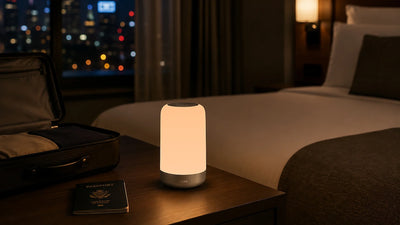
Lighting has different roles in the morning, daytime, and evening. While bright light is needed for activity during the day, some people may find it difficult to relax if they spend late evenings under strong white light.
The Ministry of Health, Labour and Welfare's sleep-related materials also treat the light environment and daily rhythm as important factors for considering sleep. Furthermore, the International Commission on Illumination (CIE) emphasizes the importance of considering appropriate light for different times of the day.
Even in home lighting, if it can switch from bright light for daytime visibility to calming light for evenings, it can help create an environment conducive to sleep. The important point here is not that lighting directly solves sleep problems, but rather the idea of creating an environment that considers sleep rhythms.
4. Adjustable to suit different life scenarios
Even in the same room, the comfortable light differs for meals, work, study, movies, relaxation, and before sleep. Therefore, the ability to adjust brightness and color temperature is essential for creating a healthy lighting environment.
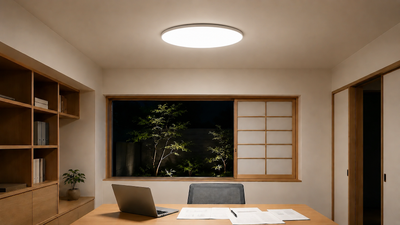
Visibility for children's study time, calmness for family evenings, and natural appearance of food colors at the dining table. When light can be changed according to daily life scenarios, lighting becomes more than just an appliance; it becomes a tool that accompanies daily life.

Lipro's concept of "healthy light"
Lipro focuses on light quality rather than just brightness. We aim to bring a natural look similar to sunlight, soft light that minimizes eye strain, and a lighting environment that adapts to different times of day and lifestyles, all in a form that is easy to use daily at home.
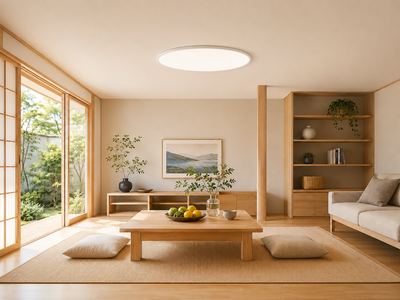
The lipro Sunlight Ceiling Light combines a light design that aims for a spectrum similar to sunlight, high color rendering of Ra97+, RG0 photobiological safety evaluation, flicker-free design, and optical design that minimizes glare.
Additionally, it supports color temperature adjustment from 3000K to 5000K and dimming from 1% to 100%. From morning preparations, children's studies, remote work, to family time in the evening, you can adjust the light to suit various daily scenarios.
What lipro proposes is not light just for special occasions. Because it is something used daily in life for long periods, we prioritize a lighting environment that considers eye and sleep rhythms, ensuring families can live comfortably.
Summary: Lighting transforms from "illuminating" to "harmonizing"
Healthy light is not magical light that dramatically changes something. It's light that is gentle on the eyes, appears natural, and can be used comfortably according to the time of day and lifestyle.
In future lighting choices, please reconsider not just "how bright it is," but also "how natural it looks," "whether glare and flicker are minimized," and "whether it's easy to use at night."
Start by reviewing the light in your daily life. Bring light that is gentle on the eyes and similar to sunlight into your everyday. Lipro proposes a lighting environment that supports a healthy lifestyle, starting with home lighting.
Learn more
- lipro's sunlight reproduction technology
- lipro Sunlight Ceiling Light
- Optical design to reduce LED glare
- Ra97 and color rendition
- Understanding LED blue light correctly
References
- Ministry of Health, Labour and Welfare "Sleep Measures"
- Ministry of Health, Labour and Welfare "Sleep Guide for Health Promotion 2023"
- Japan Luminaire Manufacturers Association "For a correct understanding of blue light (blue light)"
- CIE "Position Statement on Integrative Lighting"
- JET "Photobiological Safety (PBS)"
💡 liproなら、この記事で紹介したすべての条件を満たしています